
Review · OKINAWA
Naha: Guided E-Bike Tour of the 12 Zodiac Temples
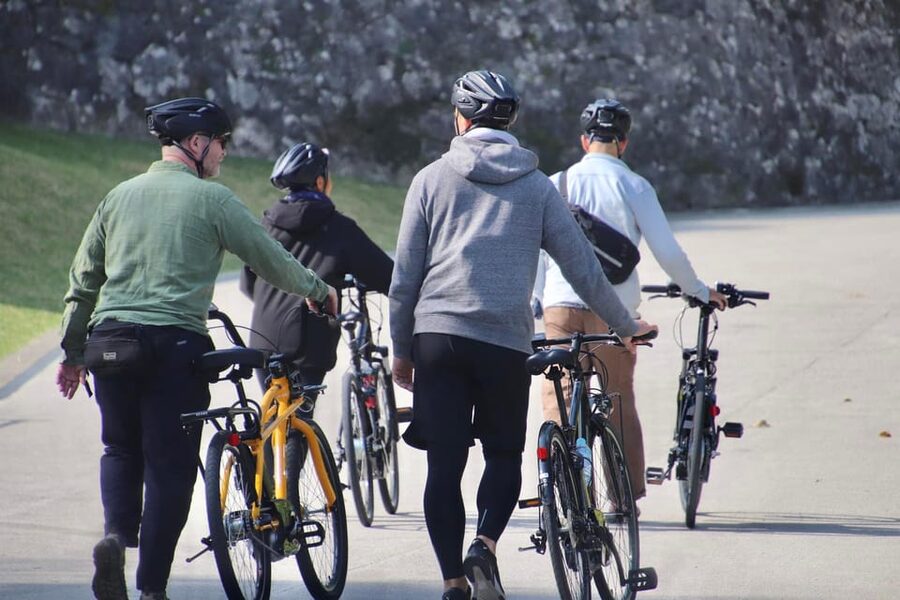
Shuri is best explored on two wheels. This three-hour Naha tour combines quiet temple lanes with the practical ease of an electric bicycle, and I like that it reaches tucked-away sites most people miss. I also like the helmet intercom system, which lets you hear guide Maki, Maria, Hiro, or another English-speaking guide without bunching up beside traffic.
The main tradeoff is simple: you must already be comfortable riding a bike. Naha has hills, sun, and traffic, even with electric assistance. At $95 per person, the price makes the most sense if you value a small group, personal guiding, and access to places that are awkward to find on foot.
Key points at a glance
- Electric help for Shuri’s hills: The bikes make uphill stretches far less tiring, but this remains an active ride.
- A small group of no more than five: The guide can give directions, adjust the pace, and answer questions more easily.
- Temple lanes beyond the usual sights: You visit Shuri Kannon, Ankokuji, Daruma Temple, Seikoji, and Sogenji, with a stop at a historic spring.
- The red Shureimon Gate photo stop: You can pose with your bicycle at one of Okinawa’s best-known symbols.
- Clear communication while riding: Helmets with speakers and microphones help you hear the guide and talk with the group.
- Useful local context: Guides explain Buddhist and Shinto customs, royal connections, prayer traditions, and the story of the Shuri area.
Why an e-bike makes sense in Shuri
The heart of this experience is not speed. It is access.
Shuri’s important religious sites are spread through side streets and residential-looking corners. A car moves too quickly to notice them, while walking between every stop can take time and energy. On an electric bike, you cover the ground without turning the day into a hard workout.
The route includes cycling sections of roughly 15 to 20 minutes between stops. That is long enough to feel like you are exploring Naha, not simply being driven from one attraction to the next. It is also short enough to leave room for temple visits and explanations.
The electric motor is especially useful on hills. One participant described the uphill sections as easy with the e-bike, and that is the practical benefit you are paying for. You still pedal, steer, watch traffic, and ride in the Okinawan sun, but the motor takes much of the sting out of climbing.
The shop supplies a helmet with an intercom system. This is a small but excellent touch. Your guide can give directions, point out details, and check that everyone is comfortable without shouting across the road. It also helps the group stay together without riding wheel-to-wheel.
You need comfortable shoes and clothing suitable for cycling. Sandals and flip-flops are not allowed, and you should bring water, sunscreen, and a hat. Smoking is not permitted during the tour.
More RIB and Zodiac Boat Tours in the world:
- Tadoussac/Charlevoix: Whale Watching Zodiac Tour
★ 4.3 · 2,716 reviews - Exhilarating Rib experience – Dingle sea safari
★ 5.0 · 1,349 reviews - From Stavanger: RIB Tour to Lysefjord
★ 4.9 · 1,288 reviews
Starting near Makishi Station
The meeting point is at the tour shop in Daisho Building, about a five-minute walk from Monorail Makishi Station and next to a post office.
That location is useful if you are staying near Kokusai Street or arriving by monorail. You begin and end at the same place, so there is no need to arrange a second pickup or figure out where to leave the group at the end.
At the shop, you are fitted with your electric bicycle and helmet. This is the moment to speak up about comfort, braking, or your confidence on hills. The group is limited to five people, which should make basic adjustments easier than on a large city tour.
The guides speak English, Chinese, and Japanese. Names that have been praised include Maki, Maria, Hiro, Reiji, Jojo, Tiny, and Sally. The strongest pattern is not one particular guide, but the care shown during the ride. Guides have checked hydration, explained road directions, and adjusted the experience for different riding abilities.
That said, different riding abilities do not mean no riding ability. If you cannot ride a bicycle, this is not the right activity.
Shuri Kannon Temple and views from the red temple
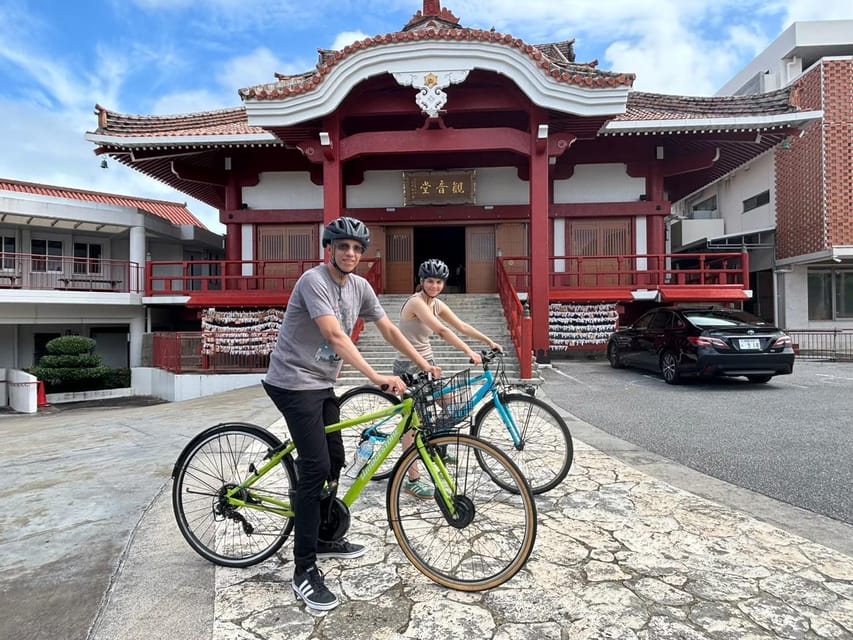
The first major stop is Shuri Kannon Temple, also called Shuri Kannondo. It served as a guardian temple during the Ryukyu Kingdom, giving the visit a direct connection to the old royal center of Okinawa.
The temple is noted for its carvings and decorations. From the bright red building, you can look out over Shuri, giving the first stop a useful sense of place. Your guide adds context about the temple and the religious customs connected with the area.
I would give this stop your full attention. It is easy to focus on the color and decoration, take a quick photograph, and move on. The better use of your time is to ask how Buddhist practice in Okinawa fits alongside local beliefs and shrine traditions. The tour is built around that kind of explanation.
The site also shows why a bicycle helps. Shuri Kannon is part of a route through backstreets, not a single straight walk between major sights. You get a look at the quieter side of the district on the way in and out.
Ankokuji Temple and the old gajumaru tree

Ankokuji Temple is a shorter visit, listed at about five minutes, but it adds a different mood. You see traditional houses, an old gate, and a large gajumaru tree.
The gajumaru, or banyan tree, is one of the visual signatures of Okinawa. Its twisting form gives the stop a sense of age and shade, while the traditional homes help you picture the religious district as part of an older neighborhood rather than a string of isolated monuments.
Do not expect a long temple tour here. This is a compact stop that works because the guide points out what you might otherwise pass. If you prefer spending 30 minutes at every religious site, the pace may feel brisk. If you like seeing several different places in one outing, the short visit keeps the route moving.
A few more speedboat days around the world worth a look
- Fiordland Jet Boat and Biking Combo from Te Anau
★ 5.0 · 133 reviews - Half-Day Mekong Delta by Speedboat and Leisure Biking
★ 5.0 · 87 reviews - Mekong Delta Full Day Trip by Speedboat with Leisure Biking
★ 5.0 · 44 reviews - Zodiac Shrines and Naha Backstreets Cycling Tour
★ 5.0 · 29 reviews
Shureimon Gate, Okinawa’s classic bicycle photograph
The Shureimon Gate is the most recognizable photo stop on the route. Its bright red structure is a symbol of Okinawa, and you get time to take a picture with your bike in front of it.
The bicycle adds something to the photograph. It shows how you reached the gate and gives the image a more personal feel than a standard landmark snapshot. Your guide may also help with photos, a useful service when you are traveling without someone to stand behind the camera.
This is also the stop most likely to feel familiar, since Shureimon is a major Shuri sight. The value comes from how it fits into the wider ride. You are not only arriving for a gate, taking a picture, and leaving. You have already seen smaller temples and local lanes, so the famous monument becomes part of a larger picture of Shuri.
Daruma Temple and prayers for health
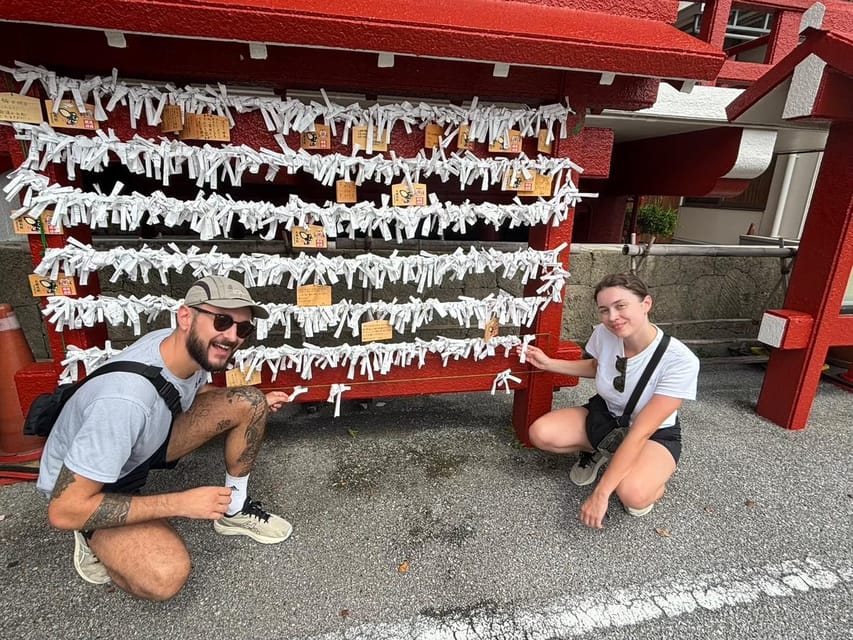
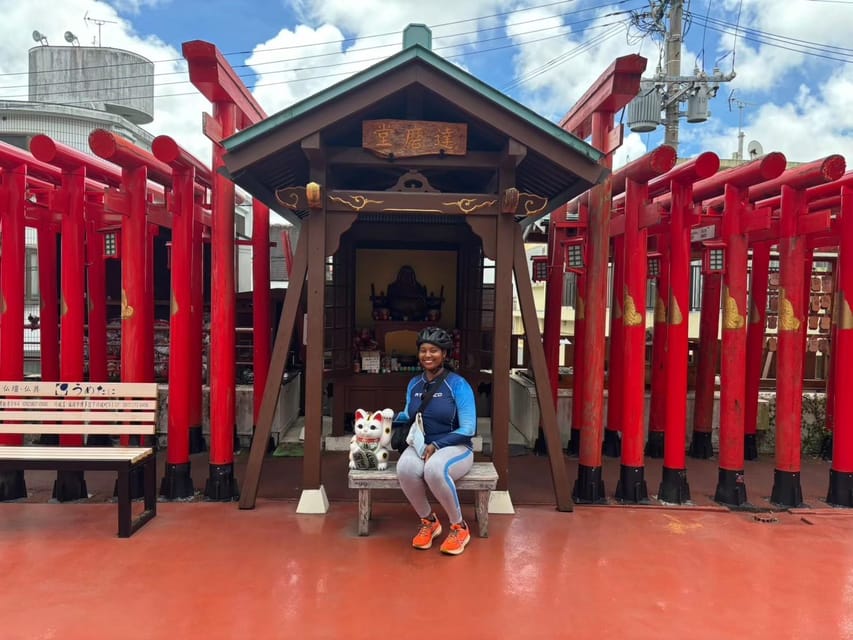
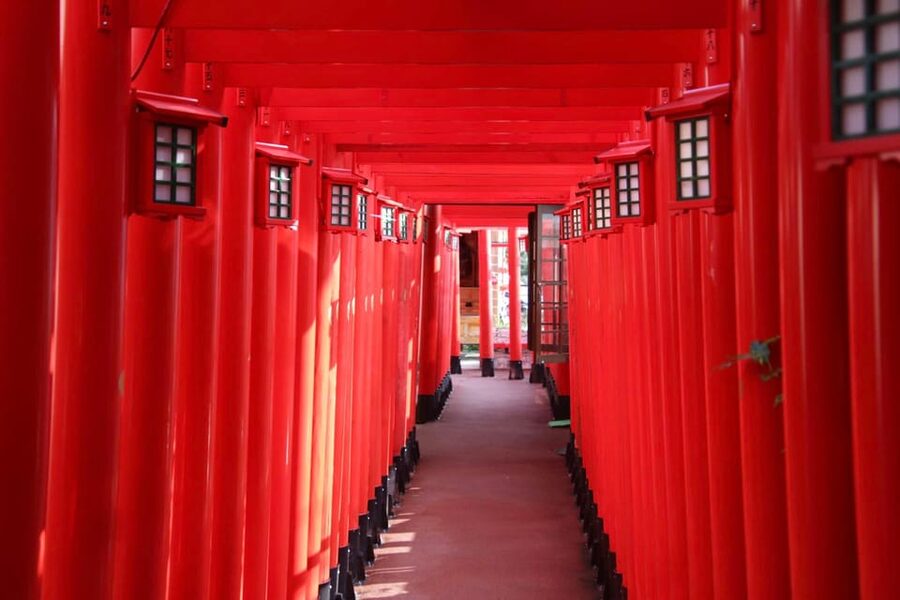
Daruma Temple is associated with prayers for health and pregnancy. The red daruma dolls and torii gate give this stop a strong visual identity.
The temple offers a useful reminder that religious sites are not all visited for the same reasons. Some are tied to royal history, some to protection, some to personal hopes, and some to quiet reflection. Your guide explains those differences, which helps you look past the bright colors and understand why people come here.
The listed visit lasts around 20 minutes. That is enough time to see the gate and dolls, hear the explanation, and take a few photographs without turning the stop into a long formal ceremony.
Money offerings are not included. If you wish to offer money at a temple or shrine, bring some yen separately. Meals and drinks are also not included, so carry water from the start.
Seikoji Temple and a quieter pause
Seikoji Temple brings the pace down. It is described as peaceful, with a sacred atmosphere, Jizo statues, and a modern building.
The contrast matters. The tour moves between colorful gates, old trees, royal connections, and quieter religious spaces. Seikoji gives you a chance to notice the less theatrical side of Okinawan worship.
The visit is listed at about 10 minutes. That makes it a brief stop, but the guide’s explanation can give the statues more meaning than a quick photograph would. If you are interested in how memorial and protective figures appear in Japanese Buddhist settings, listen closely here.
The temple also provides a natural pause in the cycling rhythm. You ride, stop, learn, and ride again. That pattern keeps the three-hour tour active without making every minute feel rushed.
Saki Kasahigawa, the spring from the forest
Saki Kasahigawa is described as a miracle spring flowing from deep forest. The moving water offers a small but memorable change from temples and gates.
This stop is valuable because it connects the spiritual side of the route with the physical setting. Instead of looking only at buildings, you pause beside water and consider why a spring could gain religious importance. Your guide explains the history associated with it, allowing the place to function as more than a scenic break.
Bring water for yourself, even though you will see water along the way. The Okinawan sun can be strong, and the cycling sections add to your need for regular drinks.
Sogenji Temple, royal connections, and a final quiet park
The final major temple stop is Sogenji Temple, a former royal mausoleum. You see the gate and another large gajumaru tree, while the surrounding park provides a calm finish to the sightseeing portion.
The pure air and open park setting make this a fitting place to slow down before returning to the shop. The royal connection also links back to Shuri Kannon and the wider story of the Ryukyu Kingdom.
The tour description places Sogenji among the final stops, though the condensed timing may vary by day. Weather, traffic, group pace, and the exact route can affect how long you spend at each location.
What the $95 price really buys
At $95 per person, this is not the cheapest way to see Naha. You are paying for a three-hour guided outing, an electric bicycle, a helmet with intercom, and a small group capped at five people.
The value is strongest if you would have trouble finding the smaller temples yourself. Several sites are on side streets and are easy to miss without local direction. You also receive explanations about the Shuri area, Okinawan religious traditions, and the meaning of individual sites.
The price is less compelling if you mainly want to see Shureimon Gate and take a quick photograph. You can visit a major landmark without booking a guided ride. This experience earns its cost through the less obvious stops, route planning, bicycle assistance, and personal attention.
The guide can also shape the final part of the outing. One participant received suggestions for additional places to see, while another appreciated an extra bakery stop. Such additions should not be treated as guaranteed, but they show how a small group can allow some flexibility when time permits.
Who should book this ride
I would recommend this tour to anyone who is comfortable on a bicycle and wants more than Naha’s main shopping streets. It suits couples, friends, and solo visitors who like local stories but do not want a full day of walking.
It is especially useful for first-time visitors who want an introduction to Shuri’s religious sites. Guides have explained customs in detail, helped riders manage traffic, and adjusted their approach for different skill levels.
Families and mixed-ability groups should think carefully. The e-bikes help with hills, but every participant must be able to ride. If one person is uneasy in traffic or dislikes cycling, the group may not enjoy the route equally.
Hot weather is another consideration. Wear proper shoes, protect yourself from the sun, and bring water. The tour can change plans if the chance of rain exceeds 70 percent or severe weather is expected, with notice sent the day before.
Free cancellation is available up to 24 hours before the start, and you can reserve now and pay later. Starting times depend on availability.
Should you book the 12 Zodiac Temples tour?
Book it if you want to see Shuri through quiet lanes, small temples, local prayer traditions, and a bit of active sightseeing. The electric bikes, intercom helmets, and five-person limit make the route easier and more personal than a standard group excursion.
Skip it if you cannot ride a bike, dislike sun and hills, or only want a quick visit to the best-known gate. For the right rider, though, the $95 fee buys more than transport. It gives you a practical route through places you might not locate alone, with guides who have been praised for warmth, clear explanations, safety checks, and genuine enthusiasm for Okinawa.
FAQ
Where does the tour start and finish?
It starts and ends at Daisho Building, the tour shop about a five-minute walk from Monorail Makishi Station, next to a post office.
How long does the tour last?
The tour lasts three hours.
How many people can join the group?
It is a small-group tour limited to five participants.
Which languages are available?
Guiding is available in English, Chinese, and Japanese.
Is an electric bicycle provided?
Yes. Electric bicycle rental is included in the tour price.
Is a helmet included?
Yes. A helmet with an intercom system is included, allowing communication with the guide and group during the ride.
What should I bring?
Bring comfortable shoes, water, sunscreen, and a hat. Wear clothing suitable for cycling.
Can someone who cannot ride a bike join?
No. People who cannot ride a bicycle are not suitable for this tour. Sandals and flip-flops are also not allowed.
What happens in bad weather?
If the chance of precipitation exceeds 70 percent or severe weather is expected, the plans may change. The operator will contact you the day before.
Just added around the world
- Wanaka: Jet Boat & Wilderness Walk★ 4.9 · 42 reviews
- Taupo: Waikato River Jetboating Adventure★ 4.9 · 85 reviews
- Wānaka: Heli Siberia Max – Helicopter Flight, Hike, Jet Boat★ 5.0 · 3 reviews
- Kauai: Nā Pali Coast Zodiac Raft Sea Caves + Snorkel★ 4.9 · 166 reviews
- Wānaka: Heli Siberia – Helicopter Flight, Hike & Jet Boat★ 4.6 · 4 reviews
- Go Jets Wanaka Clutha River Jet Boat Experience★ 5.0 · 5 reviews
- Vlore: Speedboat Adventure Sazan Island & Haxhi Ali Cave★ 4.4 · 18 reviews
- Vlore: Secret Blue Gem Cave and Grama Bay Tour by Speed Boat★ 5.0 · 9 reviews
RIB & Zodiac Boat Tours, compared.


Exhilarating Rib experience – Dingle sea safari
Read our review →


From Svolvær: Lofoten RIB Sea Eagle Safari Trollfjord Cruise
Read our review →

Granite Falls Zodiac Tour by Vancouver Water Adventures
Read our review →Browse the lists this tour appears in