Review · PORTUGAL
Horta: University Startup Whale and Dolphin RIB Boat Trip
Whales are only part of the story. This Horta trip pairs fast RIB-boat travel with University marine researchers, so you get both wildlife sightings and clear explanations of what you are seeing. I like the land-based whale spotters, which help the skipper search wisely, and I like that the crew records data while respecting the animals. The main drawback is simple: wildlife is never guaranteed, and rough water can make the ride lively.
The $101 price is fair for a three-hour outing that includes waterproof clothing, insurance, a safety briefing, and a marine researcher on board. I would especially consider it if you want more than a quick photo of a whale, though the semi-rigid boat is not suitable for pregnant women, children under five, or anyone with serious back problems.
Key points to know before you go
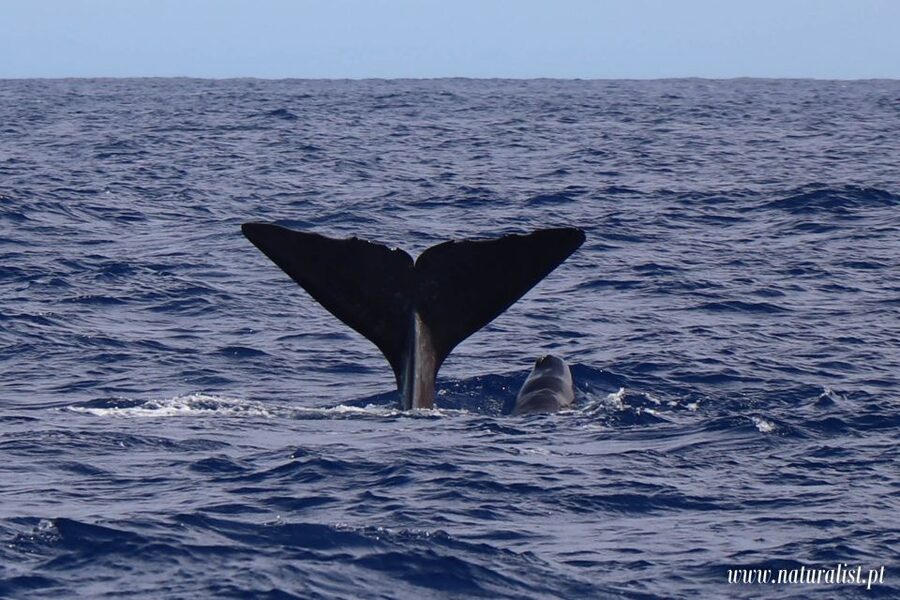
- Sperm whales live here year-round, while blue, fin, humpback, sei, and Bryde’s whales appear at different times of year.
- A university marine researcher joins the boat, adding current information about animal behavior and helping collect scientific data.
- The RIB carries up to 16 people, though some outings have been smaller, with 11 or 12 passengers.
- Three hours gives the crew time to search, and the normal sightings are two or three cetacean species.
- The sea can be rough and wet, especially in the front seats, even when waterproof trousers and jackets are provided.
- The wildlife list goes well beyond whales, with dolphins, turtles, sharks, sunfish, squid, seabirds, and flying fish possible.
Why Horta is such a good base for whale watching
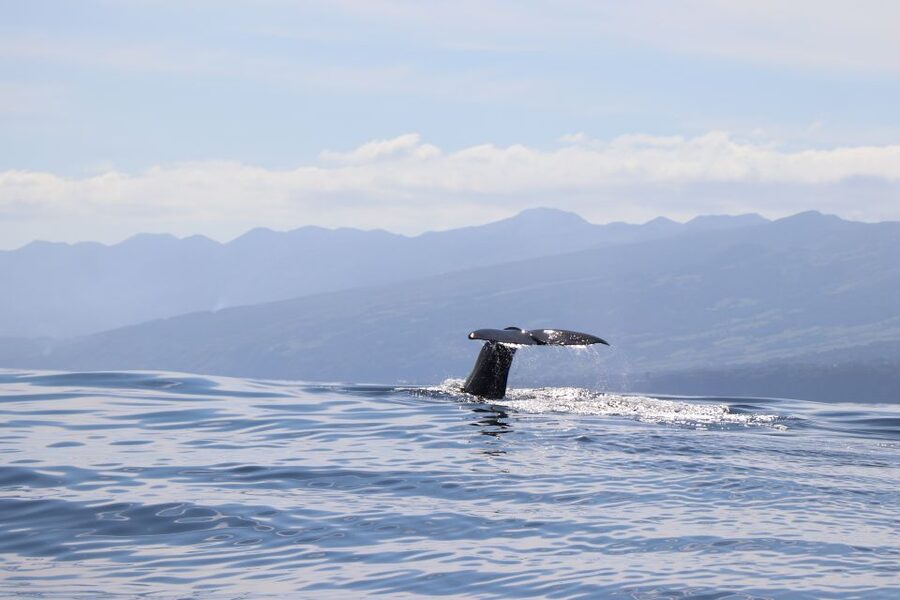
Horta sits on Faial Island, close to Pico and the deep Atlantic waters where large cetaceans pass. The region has more than 25 cetacean species, which gives the crew a broad field of possibilities rather than a single target animal.
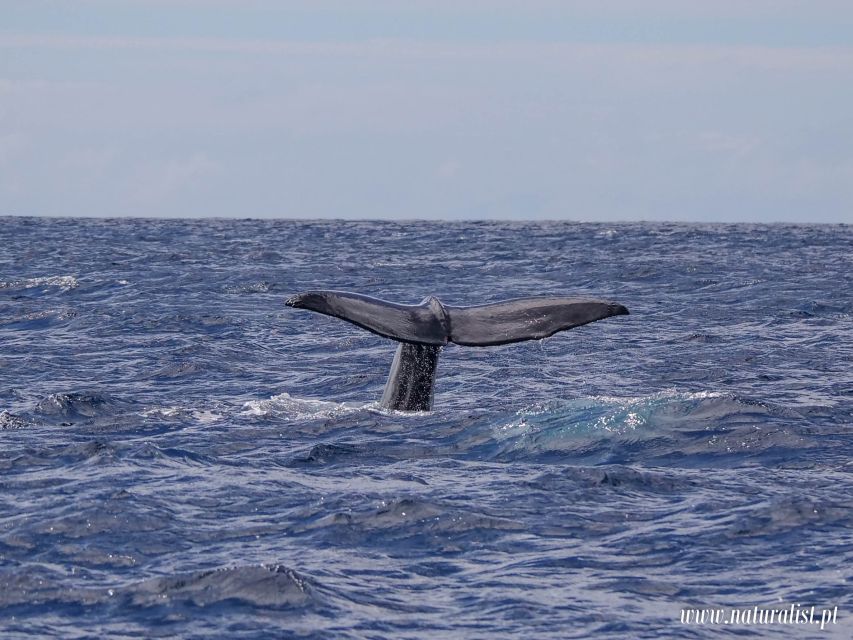
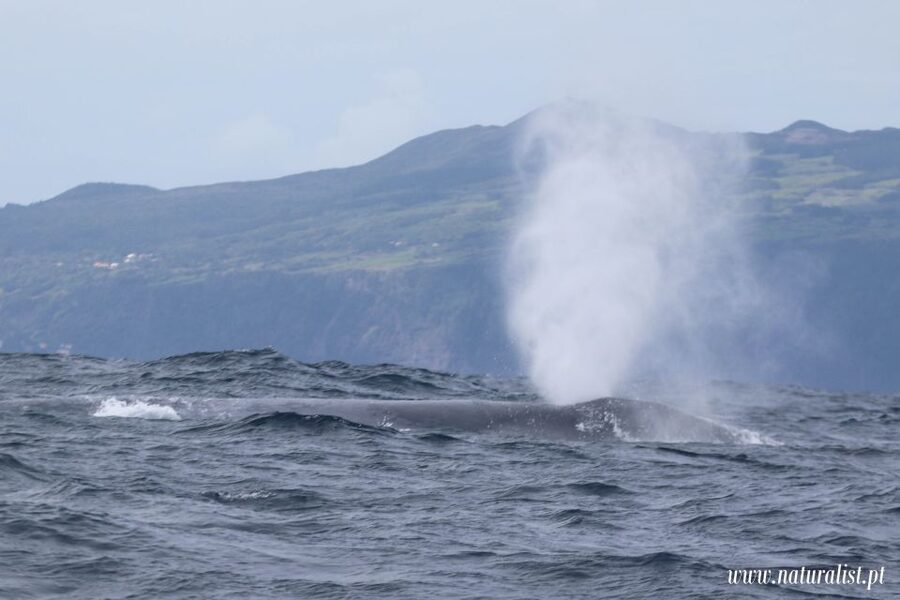
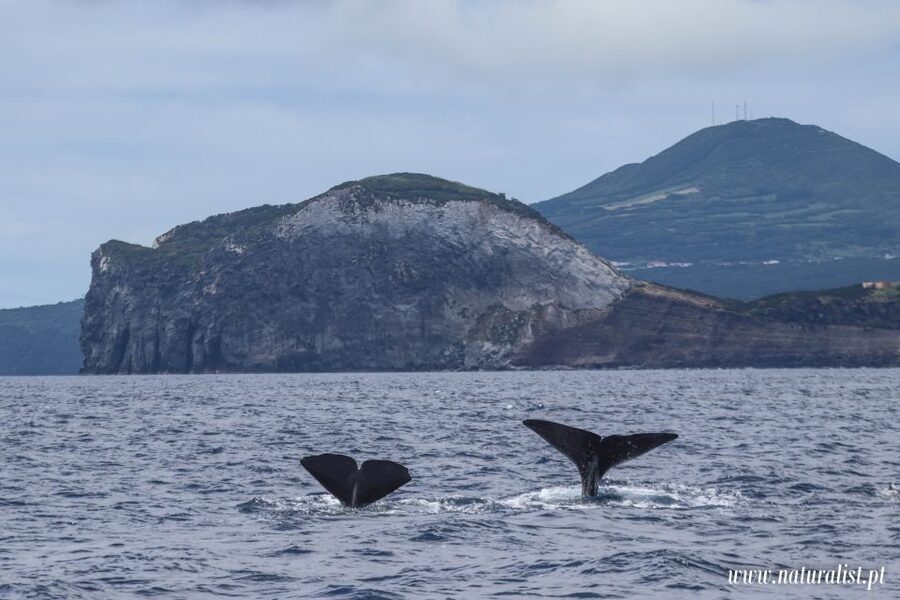
Sperm whales are the most dependable large whale here because they are resident throughout the year. Blue and fin whales are more closely linked with spring. Humpback and sei whales are migratory, while Bryde’s whales may also appear during summer. The timing improves your chances for certain species, but no month guarantees a particular sighting.
That uncertainty is part of the point. You are not visiting an aquarium with a scheduled performance. The crew uses information from whale spotters on land, then searches the open sea for animals that can travel, submerge, and vanish for long periods.
I like this approach because the search itself teaches you how wildlife watching works. A distant blow, a dark back, or a change in the water may be all you get at first. Then the skipper may reposition the boat and wait. One outing saw sperm, sei, and humpback whales, along with hundreds of dolphins and large numbers of seabirds. Another saw three different whale species, dolphins, tuna, and shearwaters.
More Dolphin and Whale Watching by Speedboat in Portugal
- Albufeira: Benagil Caves & Dolphin Watching Speed Boat Tour
★ 4.6 · 6,316 reviews - Funchal: Whale and Dolphin Watching Speed Boat Tour
★ 4.6 · 526 reviews - Pico Island: Azores Whale & Dolphin Watching on Zodiac Boat
★ 4.8 · 408 reviews
Meeting the boat at Horta Marina
You meet at Naturalist, Science and Tourism, Whale Watching, in the marina. Arrive 15 minutes before departure, at 8:45 a.m. for the 9 a.m. boat or 1:45 p.m. for the 2 p.m. departure.
Hotel pickup is not included, so plan your own way to the marina. Food and drinks are also not included. That matters because three hours on a moving boat can feel longer if you arrive without water or a small snack, although the outing itself does not promise a meal service.
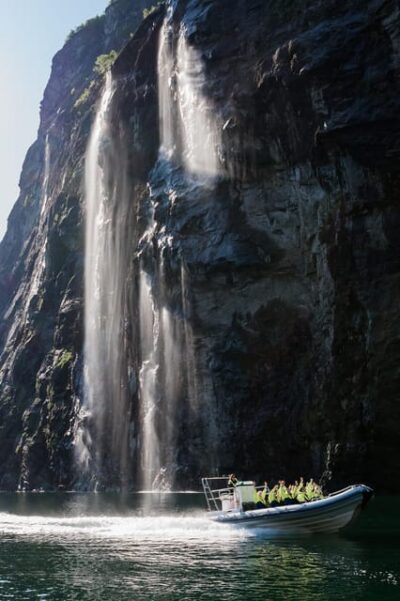
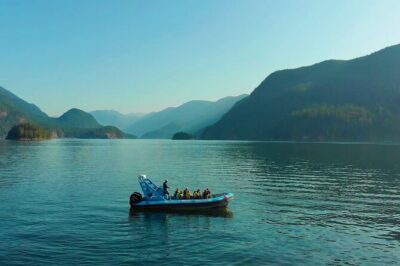
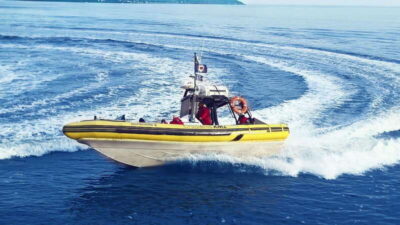
The boat is a semi-rigid inflatable, often called a RIB. It holds up to 16 passengers. The smaller size gives you a more direct connection with the guide than a large sightseeing vessel, and it lets the skipper move around more easily while searching.
The tradeoff is comfort. A RIB moves quickly, but it also responds sharply to waves. A report from an October trip described 11 tourists and two marine biologists, while another outing carried about 12 people. The exact group size may vary, but this is a small-boat experience rather than a roomy cruise.
The first 10 minutes: safety before speed
The trip begins with a safety briefing lasting about 10 minutes. This is not filler. You will be shown how to sit, how to move around the boat, and how to use the supplied equipment before the RIB heads out.
Waterproof jackets and trousers are included. Wear shoes that can handle spray or dry quickly, since the clothing does not make your feet waterproof. The front seats are the wettest and can take the most force from the sea, so choose them only if you want the most exposed ride.
The boat also carries safety insurance. Even with that protection, you should take the physical demands seriously. The operator does not recommend the trip for people with severe back problems, recent surgery, or pregnancy. Children under five are not accepted.
Searching the Atlantic with a marine researcher
Once you leave the marina, the outing combines wildlife searching with a guided look at the marine environment. The crew can explain which species occur around Faial and Pico, how the seasons affect sightings, and how researchers identify animals at sea.
A marine researcher or biologist from the University of Lisbon and the Azores joins the expedition. This is the feature I value most. Instead of receiving only broad facts about whales, you can ask about behavior, feeding, identification, and the role of the Azores in ongoing marine research.
The research element also gives the trip a clear purpose beyond entertainment. Data can be collected while the boat watches animals in the wild, and part of the money supports research. A guide may also photograph the animals, with selected pictures provided afterward at no extra charge, as happened on several outings.
The exact guide can vary. Anna received particular praise for her clear explanations, while Cristiana helped one group understand the whales and dolphins they saw. Guides have also been described as careful and friendly, with the skipper keeping a respectful distance from the animals.
More RIB and Zodiac Boat Tours in Portugal
- From Calheta: Whale and Dolphin Watching RIB Boat Tour
★ 4.9 · 298 reviews - Benagil Cave Boat Tour – Catamarans or Rib – 2 H From Portimão
★ 3.5 · 288 reviews - Funchal: RIB Whale Watching Cruise and Optional Dolphin Swim
★ 4.6 · 273 reviews - Albufeira: Dolphins & Benagil Caves RIB Tour
★ 4.6 · 241 reviews
What happens when whales appear
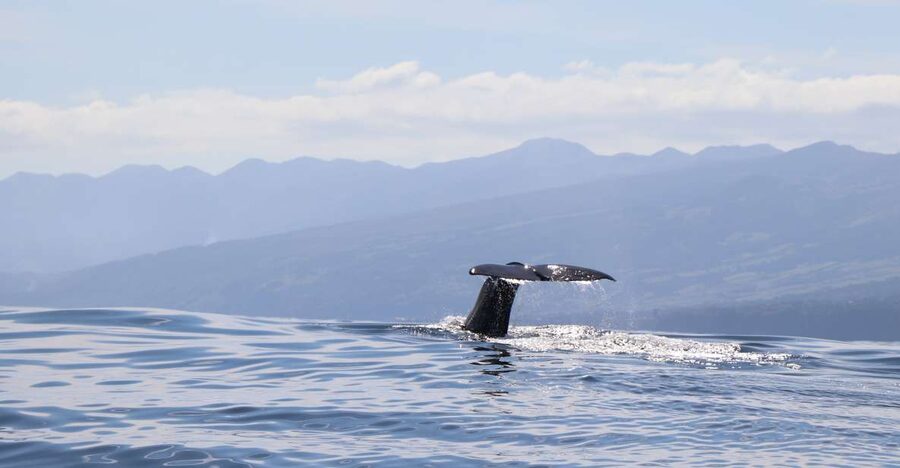
The best sightings may begin quietly. You might see a blow, then the back of a sperm whale, then the animal slipping below the surface. The captain may wait, move to another position, or try to get ahead of a traveling group without crowding it.
That patience matters. One outing had to change areas twice while the captain worked to place the boat in front of the whales. The group eventually saw five sperm whales. On another trip, two whales and dozens of dolphins came close to the boat after weather caused a date change.
A whale sighting is not always close or dramatic. One four-star account recorded no whales at all, which is a useful reminder that the ocean sets the schedule. The usual expectation is two or three different cetacean species, but that is an average, not a promise.
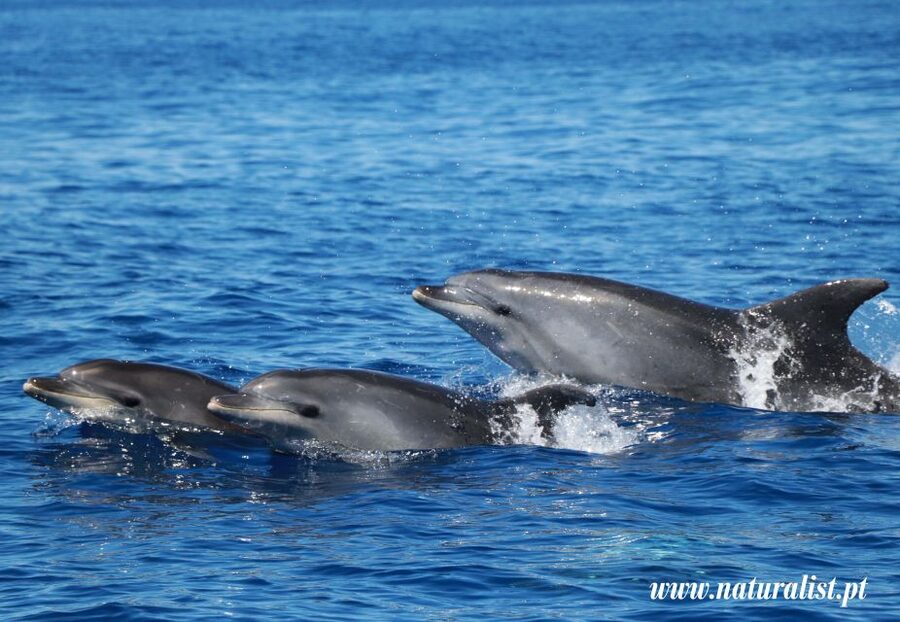
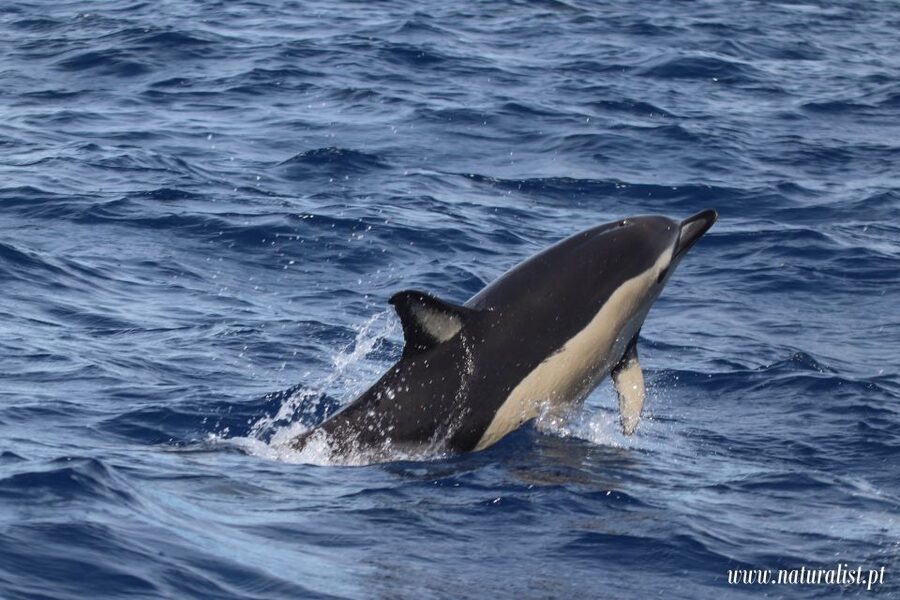
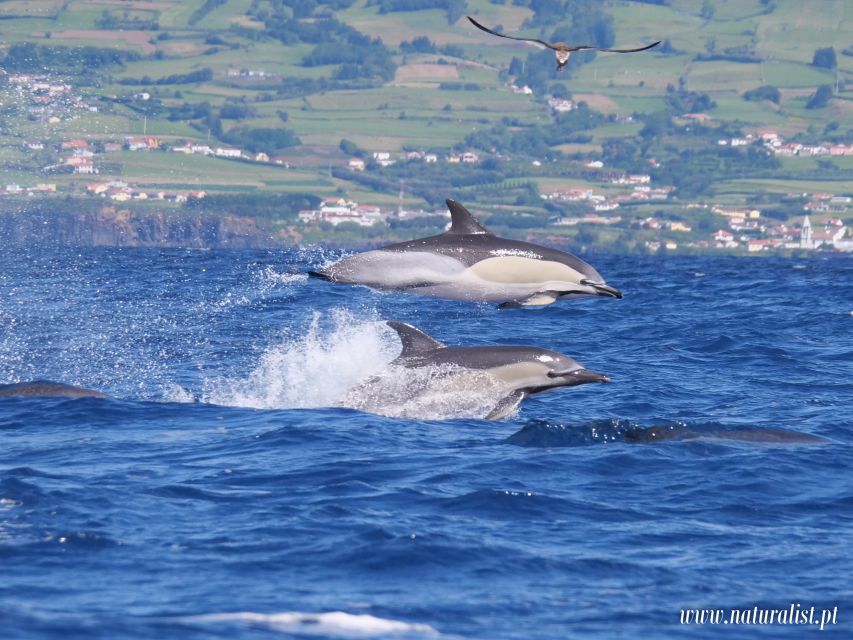
Dolphins may offer more active viewing. Bottlenose, Risso’s, and common dolphins are resident in the area, with other species passing through. They may travel in large groups, ride the bow wave, or feed near seabirds and whales. One outing saw hundreds of dolphins feeding alongside several whale species and thousands of birds.
Other wildlife beyond the headline species
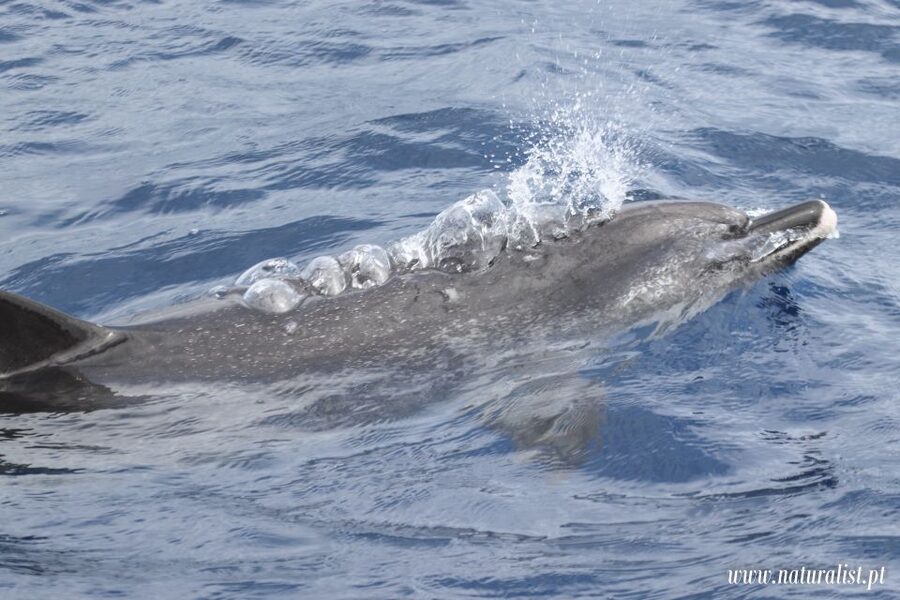
Whales and dolphins receive the attention, but the Azorean sea has a much longer cast. Loggerhead and green turtles live in the region, while leatherback and Kemp’s ridley turtles may also appear. One group saw two loggerhead turtles, an unexpected bonus during the boat ride.
You might also see sunfish, flying fish, squid, octopus, tuna, hammerhead sharks, or blue sharks. None of these are guaranteed, and some are much harder to spot than a whale. Still, the broad species list gives the marine biologist plenty to discuss during quiet periods.
Birdwatchers should bring binoculars if they have them, though the boat is moving and conditions can be wet. Cory’s, great, and Manx shearwaters are possible, as are common and roseate terns. Seabirds can also help you understand where feeding is taking place, especially when birds, dolphins, and whales gather in the same area.
This is why I would not judge the trip only by whether you see a blue whale. The wildlife can change from one outing to the next, and even a day without a whale may produce dolphins, turtles, birds, or a glimpse of a shark.
How rough is the RIB ride?
The boat can be thrilling, but the word thrilling should not hide the physical side of the experience. A RIB crossing open water can feel bumpy, particularly when the wind rises or the sea has not settled.
One spring outing was described as turbulent during the ride out. The passengers still considered the whale sightings worth it, but the rough water was noticeable. Another group said the seas were occasionally rough and warned that passengers in front could get very wet.
Your best preparation is practical:
- Wear quick-drying or waterproof shoes.
- Use the jacket and trousers provided.
- Keep phones and cameras protected.
- Avoid a front seat if you want the driest ride.
- Do not book if back pain, pregnancy, or a recent operation makes repeated jolts risky.
Weather controls the schedule. If conditions are unsafe, the trip may be rescheduled, and a full refund is available if the outing is canceled. Strong communication during a storm-related change was praised, including an arrangement that allowed one group to start from Pico instead.
Is $101 a fair price?
At $101 per person, this is not the cheapest way to spend three hours in Horta. It is also more than a basic boat ride. The price includes the marine researcher, waterproof clothing, safety insurance, and the animal briefing, which makes the package easier to justify.
You are paying for a small, fast boat, a trained crew, land-based spotting support, and access to current scientific information. You also receive a chance to support research. For someone who cares about the animals and wants context during the search, those extras add real value.
The price is harder to justify if you only want a guaranteed close-up whale photograph. No ethical operator can promise that, and this experience does not. The boat may see several species, or it may spend much of the time searching.
The strongest value comes when you treat the outing as both a wildlife expedition and a short marine science lesson. If the sea is kind, the combination can be excellent. If conditions are rough or sightings are limited, the researcher and guide still provide substance, but the physical ride may feel expensive.
Best season and departure time
The morning and afternoon trips both last about three hours. The available departure times are 9 a.m. and 2 p.m., so you can fit the boat around other plans on Faial.
Spring is a promising period for blue and fin whales. Sperm whales are present all year. Summer can bring Bryde’s and sei whales, along with resident dolphins and migratory species. Humpback and other migrating whales can appear at suitable times, but the precise mix remains unpredictable.
I would choose the time that gives you the best weather forecast rather than assuming morning is always better. Since trips depend on sea conditions, flexibility is more useful than a fixed species wish list.
The company provides information about species presence before each trip. That helps you set sensible expectations and understand what the crew is looking for on your particular departure.
Who will enjoy this experience most?
I would recommend this trip to adults, older children over five, and anyone who wants science alongside scenery. It suits people who enjoy patient wildlife watching and do not need constant action.
It is especially good for:
- People interested in whales, dolphins, and marine biology.
- Visitors who prefer a small group to a large sightseeing boat.
- Photographers who can protect equipment from spray.
- Birdwatchers who enjoy mixed marine wildlife.
- Anyone happy to support university research.
- People with flexible plans who can cope with a weather change.
I would think twice if you need a smooth, dry ride or if you are uncomfortable with uncertainty. The RIB can be bumpy, sightings vary, and the front seats can leave you soaked despite the protective clothing.
Language, cancellation, and useful planning details
Tours are offered in English and Portuguese, with Spanish also available for these expeditions. French needs to be requested ahead of time and depends on availability.
You can cancel up to 24 hours before departure for a full refund. The reserve-now, pay-later option lets you hold a place without paying immediately, which is useful when island weather can disrupt plans.
Build some flexibility into your schedule if seeing whales matters a lot to you. A storm may shift the date, and the operator may offer another departure or even a start from Pico when practical.
The wildlife photographs may be supplied afterward at no added cost, but you should still bring your own camera if you want personal shots. Keep it secure and protected from salt spray.
Should you book the Horta whale trip?
Yes, if you want a serious wildlife outing rather than a guaranteed show. The marine researcher, land-based spotting, small RIB, and careful skipper give this three-hour trip more substance than a simple boat transfer.
Book it if you can handle a rough ride and accept that nature may not cooperate. Choose another activity if you have back, pregnancy, or recent-surgery concerns, or if you need indoor comfort.
For $101, the best case is memorable: sperm whales, dolphins, seabirds, and perhaps several migratory whales in one feeding area. The more modest case is still a guided search with useful marine science, but no promised whale. That is an honest tradeoff in the open Atlantic.
FAQ
How long is the Horta whale and dolphin trip?
The expedition takes about three hours.
What time does the boat leave?
There are normally morning departures at 9 a.m. and afternoon departures at 2 p.m. Arrive 15 minutes early, at 8:45 a.m. or 1:45 p.m.
Where do I meet the boat?
Meet at Naturalist, Science and Tourism, Whale Watching, in the Horta marina.
What languages are available?
English and Portuguese are listed as available languages. The expedition information also states that Spanish tours can be arranged. French must be requested in advance and depends on availability.
Is a marine biologist included?
Yes. A marine researcher or biologist from the University of Lisbon and the Azores joins the boat, provides information, and collects marine-life data.
What wildlife might I see?
Possible sightings include sperm, blue, fin, humpback, sei, and Bryde’s whales; bottlenose, Risso’s, common, and other dolphins; loggerhead and green turtles; flying fish, squid, octopus, sharks, sunfish, tuna, and seabirds.
Are waterproof clothes provided?
Yes. Waterproof jackets and trousers are included. You should still wear shoes that can handle water or dry quickly.
Is the trip suitable for everyone?
No. It is not suitable for children under five, pregnant women, people with serious back problems, or people who have recently had surgery. The RIB can be rough, particularly in poor sea conditions.
Can I cancel if my plans change?
Yes. Cancellation up to 24 hours before departure allows a full refund. Trips can also be rescheduled or canceled because of weather, with a full refund if the operator cancels.
Just added around Portugal
- Speed Boat with Crew from Vilamoura★ 4.5 · 6 reviews
- Coasteering and Speedboat, Arrábida Setúbal, Sesimbra near Lisbon★ 5.0 · 21 reviews
- Porto 6 bridges Speedboat Tour along the Douro★ 5.0 · 27 reviews
- Funchal: Speedboat tour- SEE THE ISLAND AND LIFE AT SEA★ 4.5 · 6 reviews
- Lisbon Landmarks by Speedboat: Private 1-Hour Tour on the Tagus★ 5.0 · 16 reviews
- Lisbon Sunset Speedboat Tour★ 5.0 · 18 reviews
- Benagil Caves- Speed Boat Tour★ 4.5 · 51 reviews
- Dolphin Expedition Shared Speedboat tour with Biologist guide★ 5.0 · 5 reviews
RIB & Zodiac Boat Tours, compared.

Exhilarating Rib experience – Dingle sea safari
Read our review →
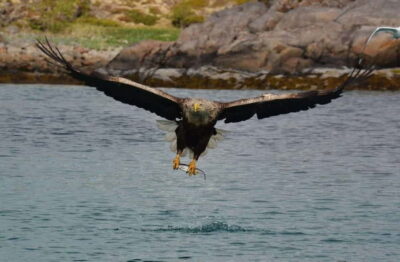
From Svolvær: Lofoten RIB Sea Eagle Safari Trollfjord Cruise
Read our review →